Photo by Dr. Mark Cook
Amid extreme drought, the Everglades is drying out. Water from Lake Okeechobee could help, but it’s mostly going to irrigate industrial sugar fields to the north.
South Florida is in the grip of a severe drought.
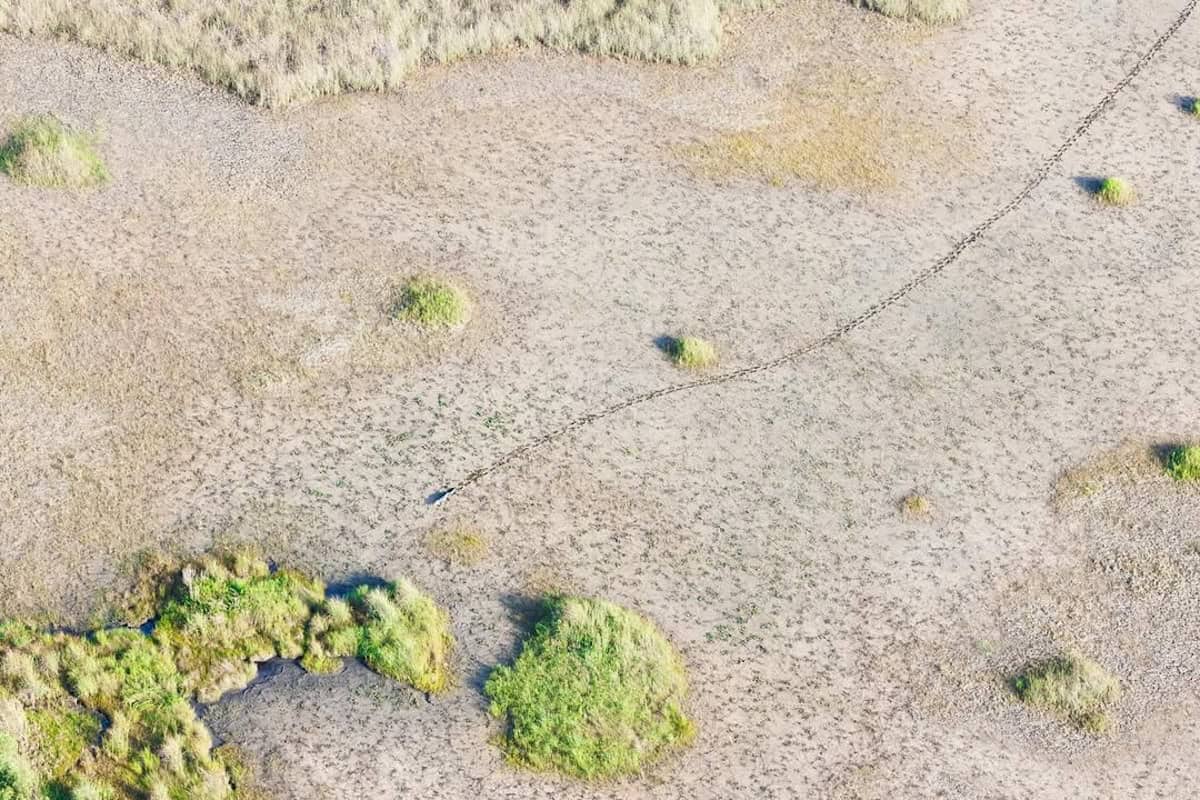
Across large portions of the Everglades, water levels have dropped to critically low levels. Wetlands that should be sheet-flowing with freshwater from Lake Okeechobee are drying out. Wildlife is under stress. Peat soils are oxidizing. Fire risk is rising. And ecosystems that depend on consistent freshwater flow are beginning to suffer lasting damage.
But while the Everglades withers, another part of the system remains heavily supplied with water.
Just south of Lake Okeechobee, industrial sugar operations in the Everglades Agricultural Area (EAA) continue receiving massive volumes of freshwater for irrigation, even as the natural Everglades struggles through one of its most severe dry periods in recent memory.
That imbalance reveals a deeper truth about how water is managed in Florida: when water becomes scarce, the system is still designed to prioritize the demands of Big Sugar over the health of the Everglades.
A Drying Everglades
Months of limited rainfall have pushed much of South Florida deeper into drought conditions.
The impacts are being felt throughout the Everglades ecosystem:
- Threatening birds, fish, alligators, and other wildlife
- Contributing to peat oxidation and long-term loss
- Damaging native vegetation and habitat
- Limiting freshwater flows into Florida Bay needed to maintain healthy salinity levels
- Increasing the risk and intensity of wildfires (While fire is a natural part of the Everglades ecosystem, prolonged drought conditions can intensify fires and increase ecological damage.)

Photo by Dr. Mark Cook
Under natural conditions, water from Lake Okeechobee would gradually flow south through the Everglades and into Florida Bay, helping sustain wetlands during dry periods.
But today, that natural flow no longer exists.
A System Built Around Artificial Priorities
For more than a century, Florida’s waters have been heavily engineered with canals, levees, pumps, and gates that redirect and control where water moves across the landscape.
One of the largest barriers interrupting the historic flow south is the Everglades Agricultural Area, roughly 500,000 acres of heavily farmed land (mostly sugarcane) located directly south of Lake Okeechobee.
Because of how the plumbing of the system is designed and operated, water that historically flowed south into the Everglades is now largely intercepted and managed around the sugar industry’s demands.
And during drought, that imbalance becomes impossible to ignore.
Right now, despite ecological conditions deteriorating across the Everglades, virtually all water being sent south from Lake Okeechobee is being consumed before it can meaningfully benefit the broader ecosystem.

Photo by Dr. Mark Cook
Between May 20 and May 27, average flows south from Lake Okeechobee were approximately 1,588 cubic feet per second, more than one billion gallons of water per day.
That is enough water to fill roughly 1,514 Olympic-sized swimming pools every single day.
And the overwhelming majority of that water is being routed to support agricultural irrigation in the Everglades Agricultural Area rather than flowing into the parched Everglades ecosystem beyond it.
At a time when wetlands are drying, wildlife is stressed, and fire danger is rising, the system continues functioning primarily to maintain water supply reliability for industrial sugar operations.
That is not a natural outcome. It is a management decision embedded into the structure of the system itself.
Restoration Is Helping, But It’s Not Enough
Completed Everglades restoration projects are helping reduce some of the damage.
Infrastructure improvements in places like Shark River Slough and Taylor Slough are allowing more water to reach southern Everglades habitats and Florida Bay than would have been possible years ago. Those projects are helping move water through historic bottlenecks and providing critical ecological relief during these dry conditions.
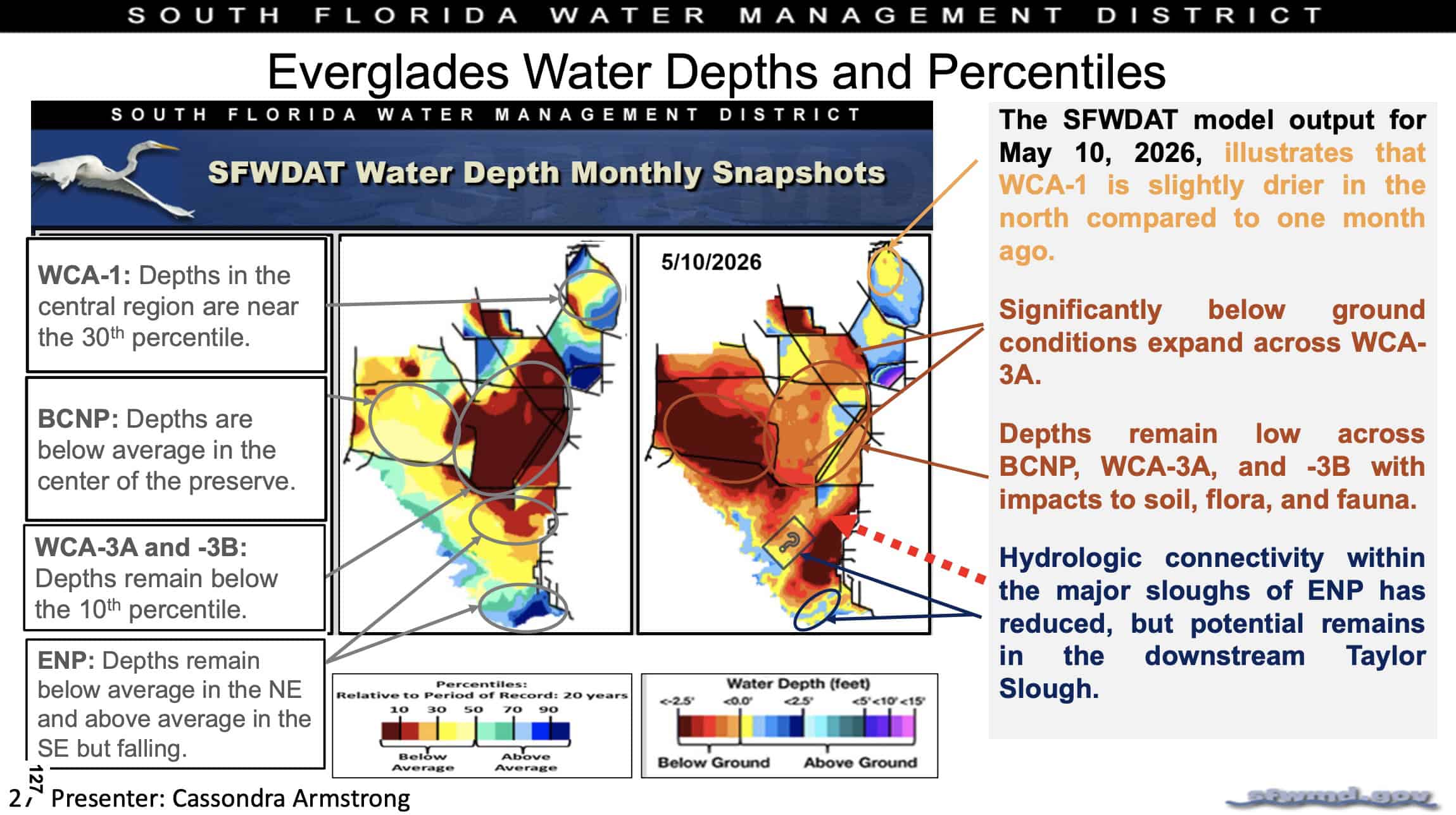
Without those restoration investments already in place, conditions across the southern Everglades could be even worse.
But restoration progress alone cannot fully overcome the deeper inequities built into the current water management system.
Even during severe drought, the sugar industry continues receiving highly reliable water deliveries while natural systems absorb the consequences of shortage.
The Everglades, the ecosystem that historically defined and sustained South Florida, is still too often treated as the last priority instead of the first.
The Damage Is Already Happening
Hopefully, seasonal rains will bring relief soon.
But even if water levels recover in the coming weeks, the damage caused by prolonged drought conditions is already underway. Dry wetlands, stressed habitat, peat loss, and ecological disruption leave scars that can persist long after rains return.
And unless the underlying priorities of the system change, this imbalance will continue repeating itself.
Florida cannot restore the Everglades while simultaneously operating a water management system that prioritizes protecting massive irrigation demands ahead of the ecosystem itself.
The Everglades should not have to compete for survival against industrial water consumption.

Photo by Dr. Mark Cook
Real restoration requires more than infrastructure projects. It requires changing the rules and priorities that dictate who receives water, when they receive it, and who bears the burden when supplies run short.
There has been some significant progress on that front too. A new playbook to manage water in south Florida was implemented in 2024, known as LOSOM. It meaningfully improved the balance of water during more normal conditions, when rainfall and the amount of water in the system is closer to average.
However, during these extremes conditions, either severe drought or a major excess of water in the system, the decision tree still guarantees the sugar industry priority and protection at the expense of the rest of the system.
That’s unacceptable.
Until that changes, South Florida’s waterways, wildlife, estuaries, and communities will continue paying the price for a system designed around the demands of the sugar industry instead of the needs of the Everglades.
Photo by Dr. Mark Cook
Amid extreme drought, the Everglades is drying out. Water from Lake Okeechobee could help, but it’s mostly going to irrigate industrial sugar fields to the north.
South Florida is in the grip of a severe drought.
Across large portions of the Everglades, water levels have dropped to critically low levels. Wetlands that should be sheet-flowing with freshwater from Lake Okeechobee are drying out. Wildlife is under stress. Peat soils are oxidizing. Fire risk is rising. And ecosystems that depend on consistent freshwater flow are beginning to suffer lasting damage.
But while the Everglades withers, another part of the system remains heavily supplied with water.
Just south of Lake Okeechobee, industrial sugar operations in the Everglades Agricultural Area (EAA) continue receiving massive volumes of freshwater for irrigation, even as the natural Everglades struggles through one of its most severe dry periods in recent memory.
That imbalance reveals a deeper truth about how water is managed in Florida: when water becomes scarce, the system is still designed to prioritize the demands of Big Sugar over the health of the Everglades.
A Drying Everglades
Months of limited rainfall have pushed much of South Florida deeper into drought conditions.
The impacts are being felt throughout the Everglades ecosystem:
- Threatening birds, fish, alligators, and other wildlife
- Contributing to peat oxidation and long-term loss
- Damaging native vegetation and habitat
- Limiting freshwater flows into Florida Bay needed to maintain healthy salinity levels
- Increasing the risk and intensity of wildfires (While fire is a natural part of the Everglades ecosystem, prolonged drought conditions can intensify fires and increase ecological damage.)
Photo by Dr. Mark Cook
Under natural conditions, water from Lake Okeechobee would gradually flow south through the Everglades and into Florida Bay, helping sustain wetlands during dry periods.
But today, that natural flow no longer exists.
A System Built Around Artificial Priorities
For more than a century, Florida’s waters have been heavily engineered with canals, levees, pumps, and gates that redirect and control where water moves across the landscape.
One of the largest barriers interrupting the historic flow south is the Everglades Agricultural Area, roughly 500,000 acres of heavily farmed land (mostly sugarcane) located directly south of Lake Okeechobee.
Because of how the plumbing of the system is designed and operated, water that historically flowed south into the Everglades is now largely intercepted and managed around the sugar industry’s demands.
And during drought, that imbalance becomes impossible to ignore.
Right now, despite ecological conditions deteriorating across the Everglades, virtually all water being sent south from Lake Okeechobee is being consumed before it can meaningfully benefit the broader ecosystem.
Photo by Dr. Mark Cook
Between May 20 and May 27, average flows south from Lake Okeechobee were approximately 1,588 cubic feet per second, more than one billion gallons of water per day.
That is enough water to fill roughly 1,514 Olympic-sized swimming pools every single day.
And the overwhelming majority of that water is being routed to support agricultural irrigation in the Everglades Agricultural Area rather than flowing into the parched Everglades ecosystem beyond it.
At a time when wetlands are drying, wildlife is stressed, and fire danger is rising, the system continues functioning primarily to maintain water supply reliability for industrial sugar operations.
That is not a natural outcome. It is a management decision embedded into the structure of the system itself.
Restoration Is Helping, But It’s Not Enough
Completed Everglades restoration projects are helping reduce some of the damage.
Infrastructure improvements in places like Shark River Slough and Taylor Slough are allowing more water to reach southern Everglades habitats and Florida Bay than would have been possible years ago. Those projects are helping move water through historic bottlenecks and providing critical ecological relief during these dry conditions.
Without those restoration investments already in place, conditions across the southern Everglades could be even worse.
But restoration progress alone cannot fully overcome the deeper inequities built into the current water management system.
Even during severe drought, the sugar industry continues receiving highly reliable water deliveries while natural systems absorb the consequences of shortage.
The Everglades, the ecosystem that historically defined and sustained South Florida, is still too often treated as the last priority instead of the first.
The Damage Is Already Happening
Hopefully, seasonal rains will bring relief soon.
But even if water levels recover in the coming weeks, the damage caused by prolonged drought conditions is already underway. Dry wetlands, stressed habitat, peat loss, and ecological disruption leave scars that can persist long after rains return.
And unless the underlying priorities of the system change, this imbalance will continue repeating itself.
Florida cannot restore the Everglades while simultaneously operating a water management system that prioritizes protecting massive irrigation demands ahead of the ecosystem itself.
The Everglades should not have to compete for survival against industrial water consumption.
Photo by Dr. Mark Cook
Real restoration requires more than infrastructure projects. It requires changing the rules and priorities that dictate who receives water, when they receive it, and who bears the burden when supplies run short.
There has been some significant progress on that front too. A new playbook to manage water in south Florida was implemented in 2024, known as LOSOM. It meaningfully improved the balance of water during more normal conditions, when rainfall and the amount of water in the system is closer to average.
However, during these extremes conditions, either severe drought or a major excess of water in the system, the decision tree still guarantees the sugar industry priority and protection at the expense of the rest of the system.
That’s unacceptable.
Until that changes, South Florida’s waterways, wildlife, estuaries, and communities will continue paying the price for a system designed around the demands of the sugar industry instead of the needs of the Everglades.