
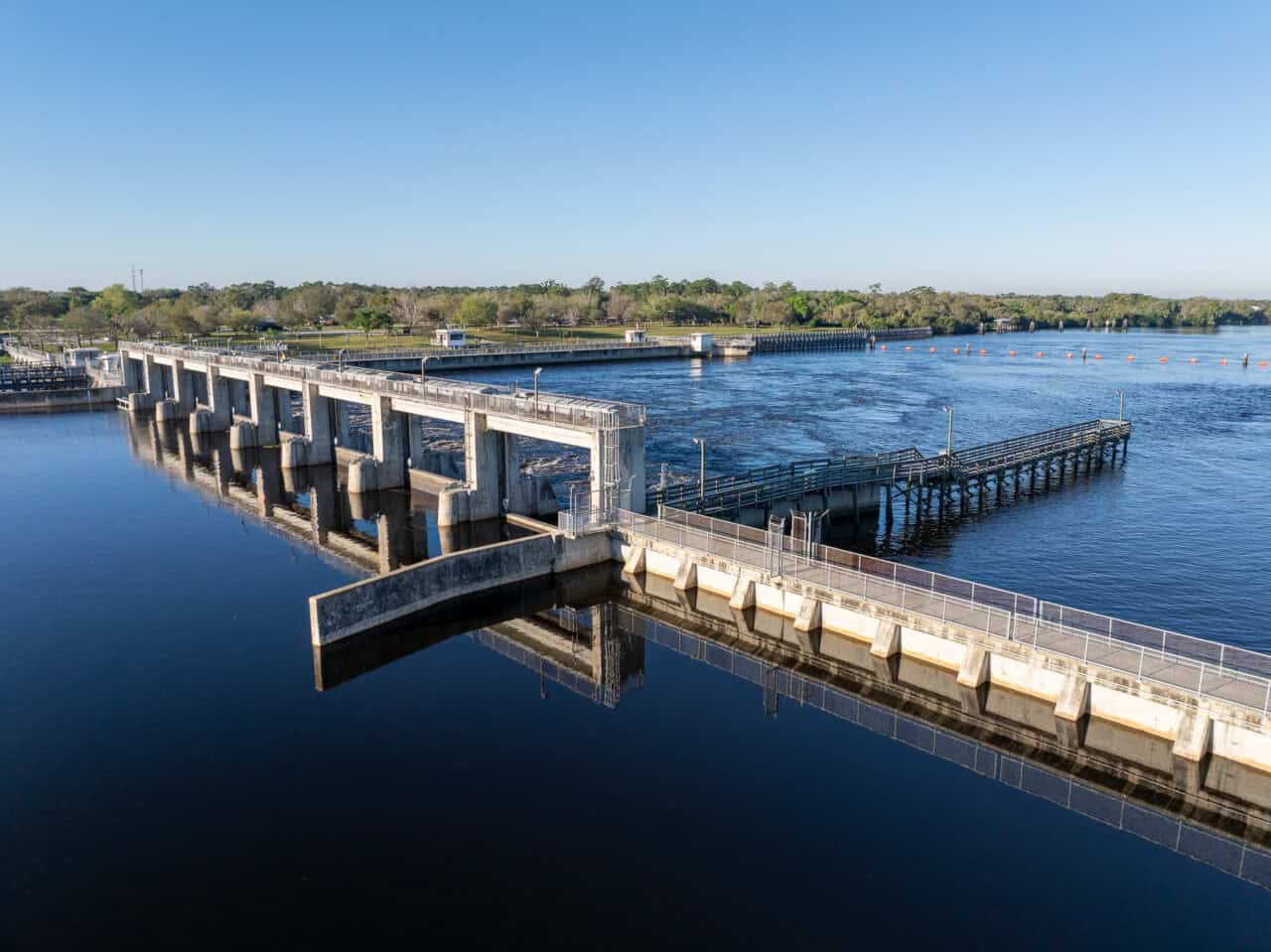
After weeks of extreme rainfall across Florida, the Army Corps is beginning to release water from Lake Okeechobee. While the initial releases aren’t particularly concerning, what they could signal about the weeks ahead has our attention.
With what’s been referred to as a “Super El Niño” seeming to take hold, Florida’s dry season is off to an incredibly wet start, and Lake Okeechobee is feeling the effects.
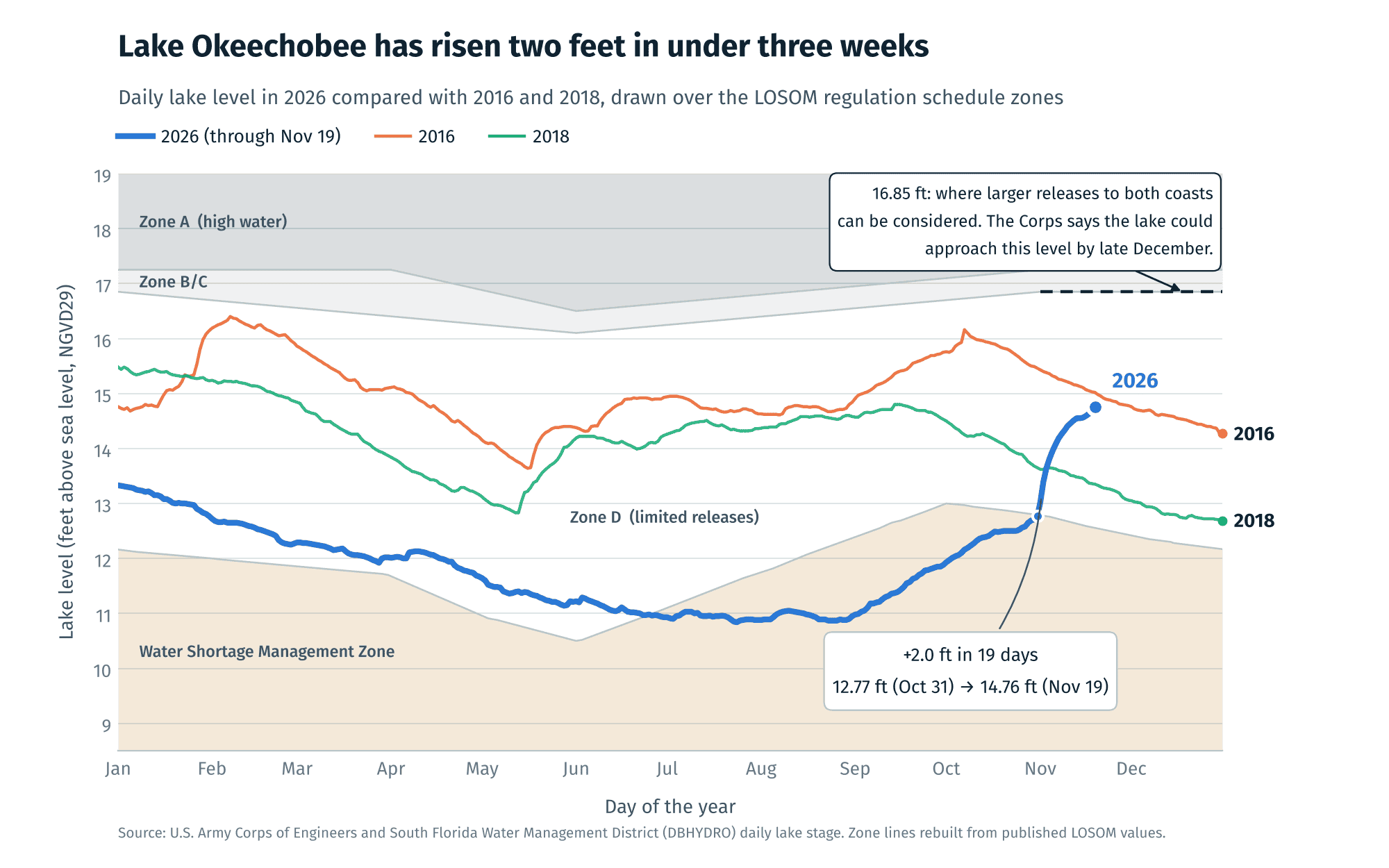
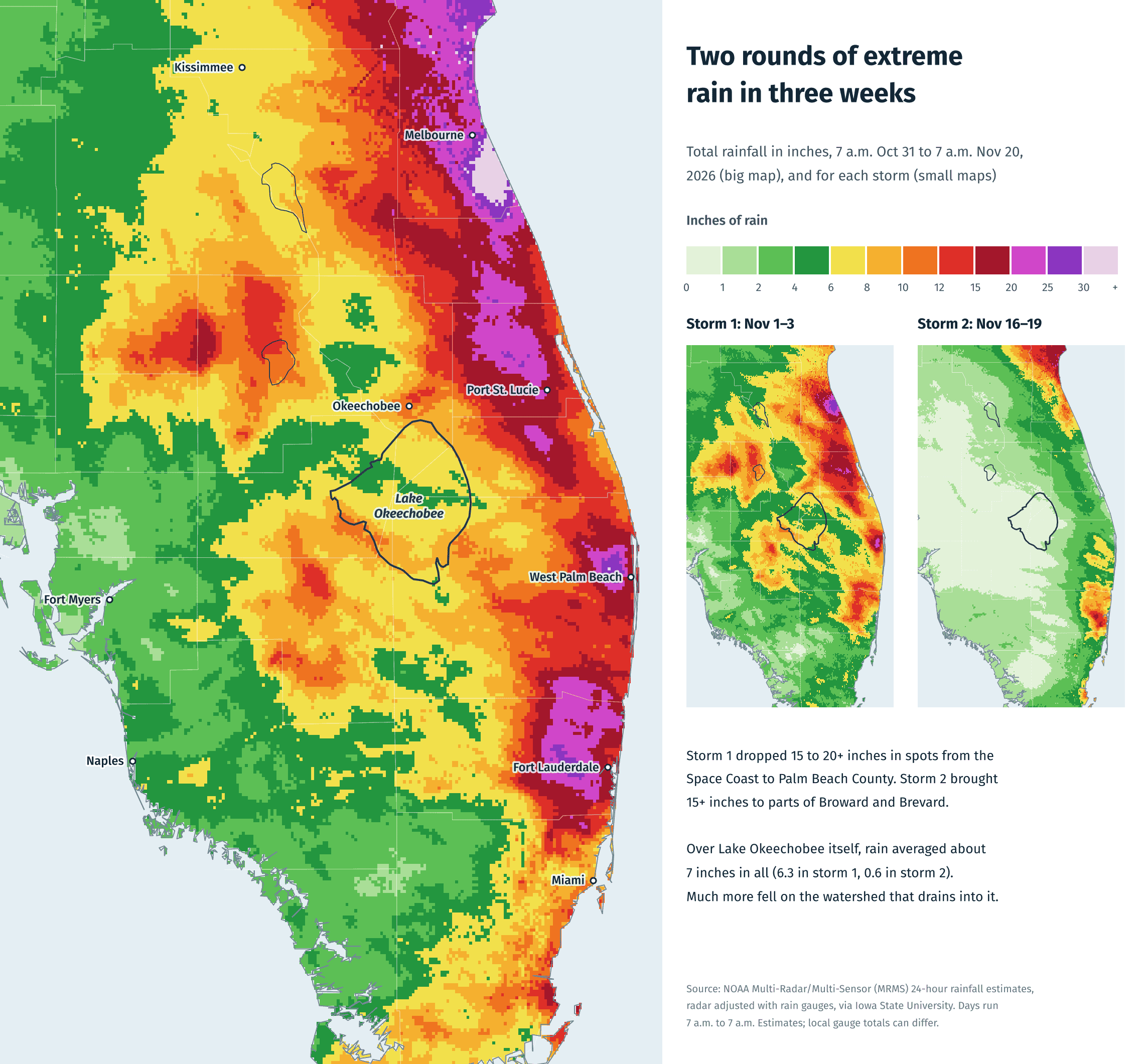
Weeks of extraordinary rainfall have hammered South Florida, causing widespread flooding and sending massive amounts of water into Lake Okeechobee. In just the past month, the lake has risen more than two feet, climbing from around 12.5 feet in late October to 14.76 feet as of November 20.
And with the surrounding watershed already soaked and more water continuing to flow into the lake, the situation is evolving quickly.
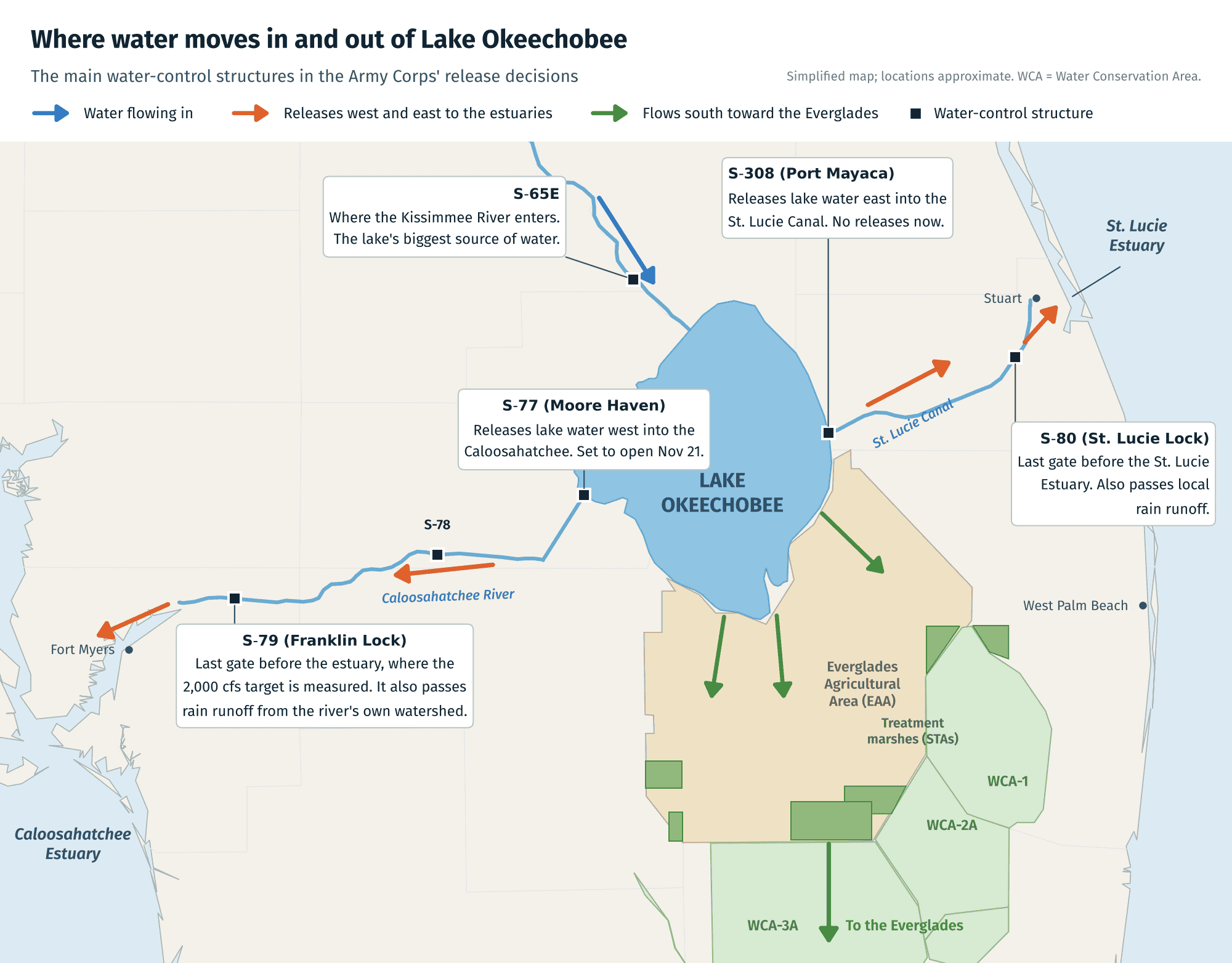
On Friday, November 20, the U.S. Army Corps of Engineers held an unscheduled media briefing to discuss the rising lake and announce its first operational response: opening the gates at S-77 to begin releasing some water from Lake Okeechobee into the Caloosahatchee River.
In the grand scheme of systemwide conditions, it’s a relatively minor move for now. But it raises a much bigger question: Could this be the beginning of a future run of damaging discharges to Florida’s coastal estuaries?
What Did the Army Corps Announce?
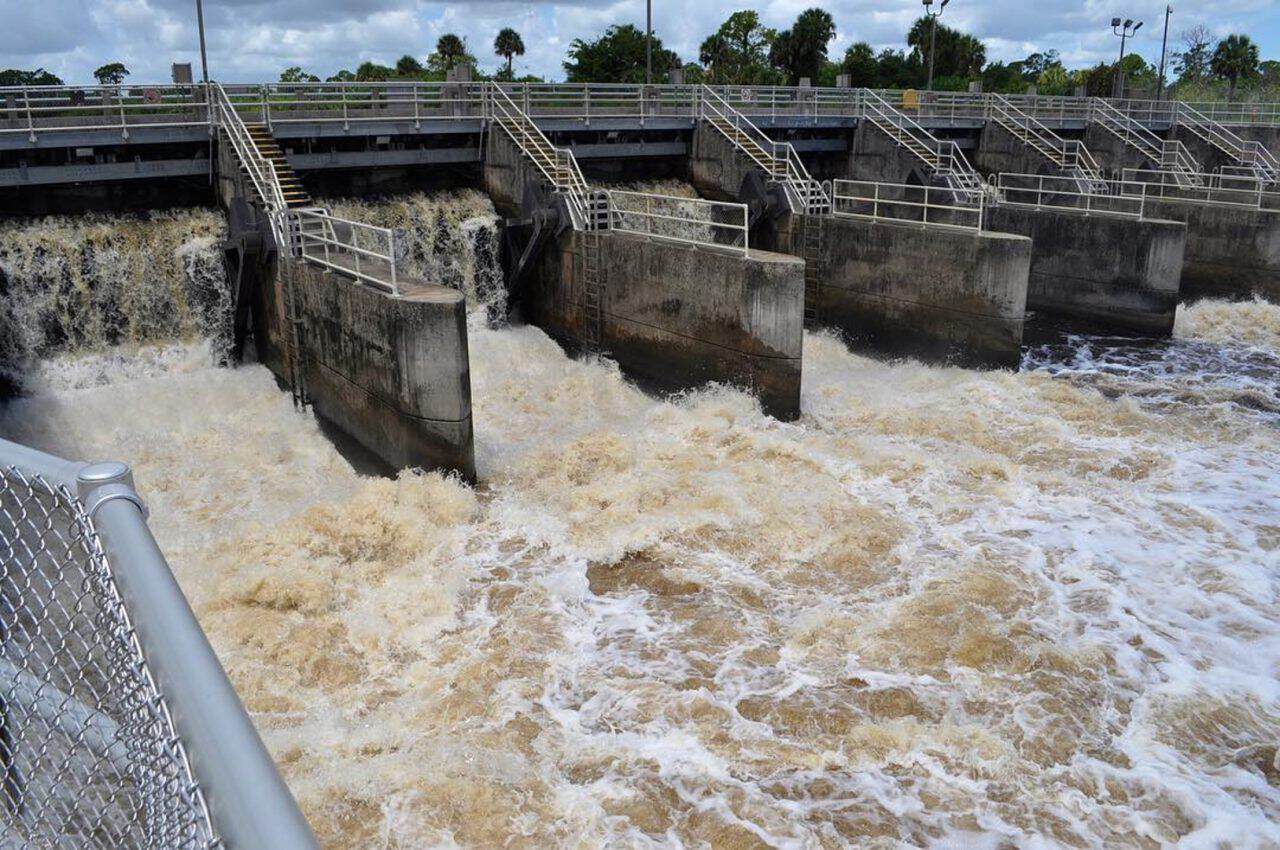
Beginning Saturday, November 21, the Corps plans to open S-77, the water-control structure at the western edge of Lake Okeechobee, to help bring freshwater flows at S-79 farther down the Caloosahatchee River to 2,000 cubic feet per second (cfs).
For perspective, that’s roughly 1.3 billion gallons of water passing through S-79 each day.
That might sound alarming, especially for anyone familiar with the devastating impacts of past Lake Okeechobee discharges. But there’s an important distinction here.
Much of the water already flowing through S-79 is coming from rainfall and runoff within the Caloosahatchee watershed, not Lake Okeechobee. Over the past seven days, flows at S-79 have averaged approximately 1,750 cfs.
That means the additional water needed from Lake Okeechobee to reach the Corps’ 2,000 cfs target is relatively small.
And importantly, that target actualy falls within the Caloosahatchee Estuary’s optimal freshwater flow range of approximately 750–2,100 cfs, evaluated over a 14-day period. Some freshwater is essential for the estuary’s health, and following months of drought and insufficient flows earlier this year, these moderate flows aren’t inherently alarming.
In other words, today’s announcement isn’t the kind of high-volume, damaging discharge we’ve fought against for years. It’s what the announcement could signal that has our attention.
Why We’re Watching Closely
The bigger concern is just how quickly conditions are changing.
Only weeks ago, Lake Okeechobee was hovering around 12.5 feet following an extended dry period. Now, after repeated heavy rainfall events, the lake has climbed more than two feet, and thousands of cubic feet of water per second are still entering it from the surrounding watershed. (Not to mention the potential for more rainfall in the coming months.)
The Corps’ decision to begin modest releases west is an early step in managing that rising water. But if lake levels continue climbing, the agency could face increasingly difficult operational decisions, including the possibility of sending much larger volumes of water to both the Caloosahatchee and St. Lucie estuaries.
During Friday’s media briefing, Deputy District Commander for the Army Corps, Maj. Corey Bell, acknowledged the possibility that Lake Okeechobee could approach 16.8 feet by late December.
That’s an important elevation to watch. Under the Lake Okeechobee System Operating Manual (LOSOM), approximately 16.85 feet marks the boundary of an operating zone where much larger releases to both coasts become allowable.
The Corps is not currently initiating Lake Okeechobee releases to the St. Lucie Estuary, but the possibility could come into play if conditions continue deteriorating. And operational decisions can also account for forecasts and projected conditions, not just the lake’s elevation on a given day.
None of this means damaging discharges are inevitable. But the combination of rapidly rising water, saturated watersheds, and an unusually wet seasonal outlook makes the possibility increasingly important to monitor.
An Extraordinary Start to Florida’s Dry Season
What’s driving all of this is a weather pattern that’s anything but typical for this time of year.
Florida ordinarily transitions into its drier months in the fall. Instead, back-to-back storms have brought staggering rainfall totals, flooding neighborhoods and roads from South Florida into the Space Coast.
During the latest round of storms, parts of Fort Lauderdale have received more than 17 inches of rain in just 48 hours, with extreme flooding spreading up into Brevard County, where emergency crews carried out numerous high-water rescues.
All impacts from what’s shaping up to be a powerful El Niño. El Niño is a recurring climate pattern in the Pacific Ocean that often brings wetter, stormier conditions to Florida during the winter. According to NOAA’s November 12 outlook, there’s a greater than 79% chance that strong-to-very-strong El Niño conditions will persist through January–March 2027.
That doesn’t mean every coming storm will produce extreme rainfall, but it does suggest Florida could be in for a much wetter winter than usual.
And with the lake already rising rapidly in November, that’s a concerning prospect.
What Happens Next?
For now, the initial Lake Okeechobee releases are relatively minor and fall within flows considered beneficial for the Caloosahatchee. But the bigger picture deserves close attention.
We’ll be watching lake levels, rainfall forecasts, water flowing into the lake, and the Army Corps’ operational decisions in the weeks ahead, particularly whether conditions begin pushing the agency toward larger releases to either coast.
This developing situation is also another reminder of why Everglades restoration remains so critical.

Construction of the EAA Reservoir, which will store, clean and send more water south from Lake Okeechobee.
No amount of infrastructure can eliminate every challenge posed by extraordinary weather. But expanding our capacity to store, clean, and move water south can reduce pressure on Lake Okeechobee and help protect our coastal estuaries, especially during the normal wet and dry cycles that define Florida’s water system.
The more of that infrastructure we can build, the better equipped Florida will be to manage water in both ordinary and extreme conditions.
For now, the question isn’t whether today’s releases are damaging. It’s whether much heavier discharges could be on the horizon.
We’ll continue monitoring this rapidly evolving situation and keep you updated as conditions change.